


The Logic of Faith (Genesis 22:1-19)

22:1 After these things God tested Abraham and said to him, “Abraham!” And he said, “Here I am.” 2 He said, “Take your son, your only son Isaac, whom you love, and go to the land of Moriah, and offer him there as a burnt offering on one of the mountains of which I shall tell you.” 3 So Abraham rose early in the morning, saddled his donkey, and took two of his young men with him, and his son Isaac. And he cut the wood for the burnt offering and arose and went to the place of which God had told him. 4 On the third day Abraham lifted up his eyes and saw the place from afar. 5 Then Abraham said to his young men, “Stay here with the donkey; I and the boy will go over there and worship and come again to you.” 6 And Abraham took the wood of the burnt offering and laid it on Isaac his son. And he took in his hand the fire and the knife. So they went both of them together. 7 And Isaac said to his father Abraham, “My father!” And he said, “Here I am, my son.” He said, “Behold, the fire and the wood, but where is the lamb for a burnt offering?” 8 Abraham said, “God will provide for himself the lamb for a burnt offering, my son.” So they went both of them together. 9 When they came to the place of which God had told him, Abraham built the altar there and laid the wood in order and bound Isaac his son and laid him on the altar, on top of the wood. 10 Then Abraham reached out his hand and took the knife to slaughter his son. 11 But the angel of the Lord called to him from heaven and said, “Abraham, Abraham!” And he said, “Here I am.” 12 He said, “Do not lay your hand on the boy or do anything to him, for now I know that you fear God, seeing you have not withheld your son, your only son, from me.” 13 And Abraham lifted up his eyes and looked, and behold, behind him was a ram, caught in a thicket by his horns. And Abraham went and took the ram and offered it up as a burnt offering instead of his son. 14 So Abraham called the name of that place, “The Lord will provide”; as it is said to this day, “On the mount of the Lord it shall be provided.” 15 And the angel of the Lord called to Abraham a second time from heaven 16 and said, “By myself I have sworn, declares the Lord, because you have done this and have not withheld your son, your only son, 17 I will surely bless you, and I will surely multiply your offspring as the stars of heaven and as the sand that is on the seashore. And your offspring shall possess the gate of his[d] enemies, 18 and in your offspring shall all the nations of the earth be blessed, because you have obeyed my voice.” 19 So Abraham returned to his young men, and they arose and went together to Beersheba. And Abraham lived at Beersheba.
SUMMARY
God tests Abraham:
2 He said, “Take your son, your only son Isaac, whom you love, and go to the land of Moriah, and offer him there as a burnt offering on one of the mountains of which I shall tell you.”
Abraham rises early. He does not delay. They travel to Mount Moriah. Isaac carries the wood. Abraham carries the knife and the fire. And then Isaac asks the question that pierces the heart:
7 And Isaac said to his father Abraham, “My father!” And he said, “Here I am, my son.” He said, “Behold, the fire and the wood, but where is the lamb for a burnt offering?
And Abraham responds:
“God will provide for himself the lamb.” (v. 8)
At the final moment, as Abraham raises the knife, the angel of the Lord stops him.
12 He said, “Do not lay your hand on the boy or do anything to him, for now I know that you fear God, seeing you have not withheld your son, your only son, from me.”
And then God provides a ram. And Abraham names that place:
“The Lord will provide.” (v. 14)
WHAT IS REALLY HAPPENING HERE?
At first glance, this feels like irrational obedience. But Scripture itself gives us deeper insight.
Hebrews 11:19 tells us:
“He [Abraham] considered that God was able even to raise him from the dead.”
Do you see that word? He considered. The Greek word translated as "considered" (or "reasoned" in some versions) is logizomai (λογίζομαι). Abraham was not acting blindly. It denotes a deliberate, intellectual conclusion based on evidence—in this case, the evidence of God's past faithfulness.
Now, what does it mean to "consider" (logizomai (λογίζομαι))?
1. To "consider" means remembering what God has already been doing (Past Record)
Abraham’s obedience did not begin in Genesis 22. It began decades earlier. God had spoken to him.
God had led him. God had preserved him. God had miraculously given him Isaac.
Of course, Abraham's faith wasn't always stellar. Consider the deception in Egypt (75-76 years, Gen. 12:10-20), the Hagar situation (86 years, Gen. 16:1-4), and the deception of King Abimelek (99-100 years, Gen. 20). By the time we reach Genesis 22, Abraham (120 years?) has a history with God. So when God speaks, Abraham is responding to a God who has been so faithful all of those years--marked especially by Abraham's failures.
Faith, then, is not irrational nor emotional. It is rooted in factual memory. It says:
“I have seen who God is. I have seen what He has done. Therefore, I will trust Him—even here.”
2. To "Consider" means holding onto God's Promises, even in seeming contradictions. (Content of the Covenant)
God had already made a promise,
“Through Isaac shall your offspring be named.” (Gen. 21:12)
Now God commands Abraham to sacrifice Isaac. That creates a tension. God’s command seems to contradict God’s promise. So what does Abraham do? Does he reject the command? Does he abandon the promise? No. He is reasoning things out, but he is not limiting God to his own logic. He uses logic and reason, but he does not make them the absolutes.
He holds onto both. Hebrews tells us that Abraham reasoned, "If God has promised that His covenant will come through Isaac, then even if Isaac dies, God must raise him.”
This is not irrational. This is deep theological reasoning. Faith does not deny the tension. It lives within it. It says, "I do not fully understand this moment, but I trust that God’s promises will still stand.”
3. To "Consider" means trusting God's character above one's understanding. (Future Hope)
When Isaac asks, “Where is the lamb?”
Abraham says:
“God will provide.”
That is the heart of faith. It is not blind obedience. But confident trust in who God is. Abraham knows something about God. God is faithful. God is just. God keeps His word. So even when the situation is unclear, Abraham trusts God's character. This is the logic of faith. Not “I understand everything.” But “I know the One who does. Therefore, in every circumstance, I will trust Him."
Now we must not stop at Abraham. Because Genesis 22 is ultimately not about Abraham. It is about Christ. Notice the parallels. Isaac is called the beloved son. He carries the wood up the mountain. He is offered by his father. But there is one crucial difference. In Genesis 22, God stops Abraham. But at the cross, God does not stop.
Romans 8:32 says:
“He who did not spare his own Son but gave him up for us all…”
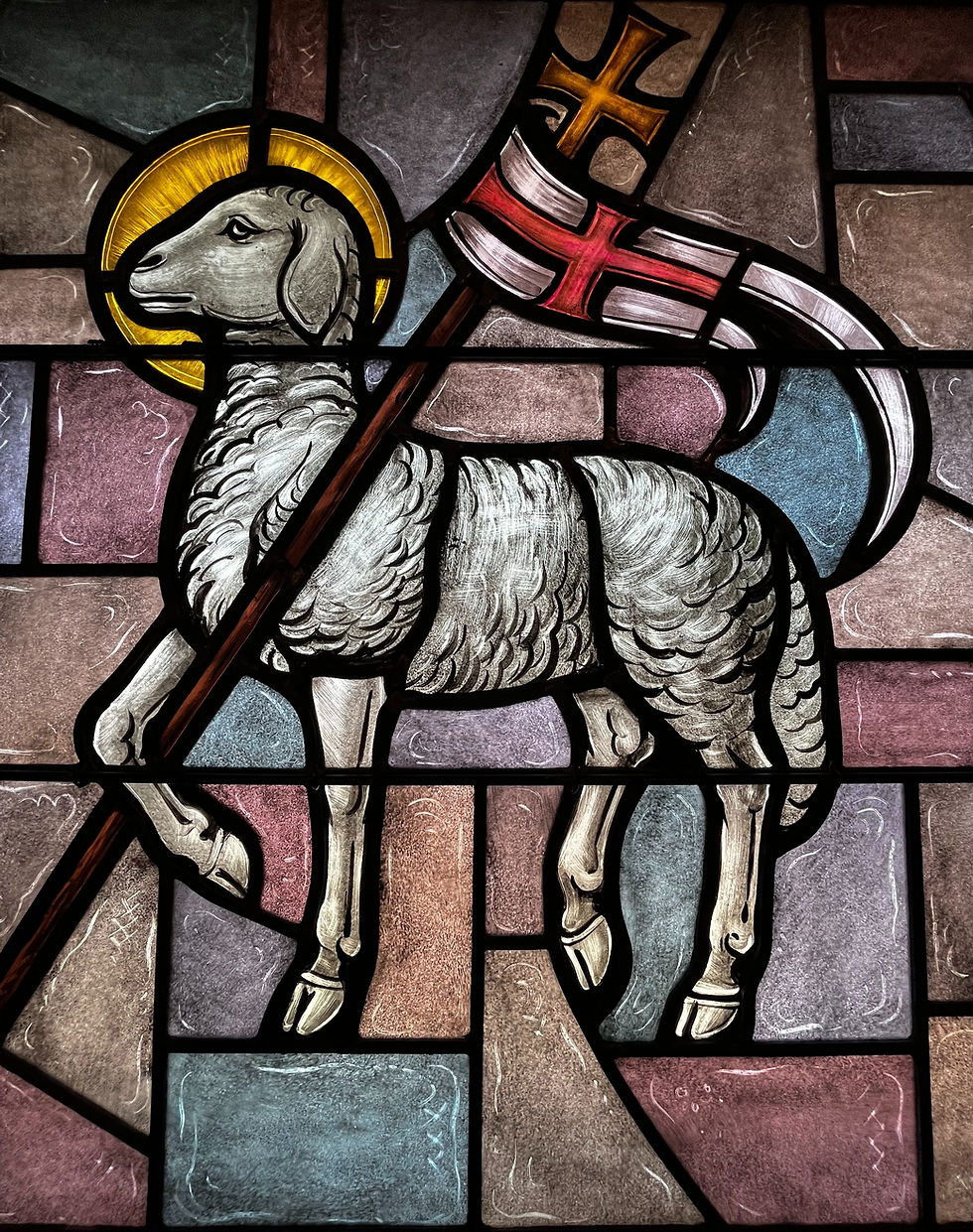
Abraham said, “God will provide.” And at the cross, God did. Jesus is the true Lamb. The sacrifice that Isaac never became. Christ fully became. So now, when we talk about faith, we are not trusting in the abstract. We are trusting in the God who has already proven His love—at the cross.
APPLICATION
So what does this mean for us? We are not Abraham. God is not calling us to sacrifice our children. Genesis 22 is a unique moment in redemptive history. But we do face moments where God’s ways seem confusing, God’s timing feels delayed, and God’s providence feels hard.
And in those moments, the question is, will we treat faith as irrational? Or will we see it as deeply grounded trust? Faith is not closing your eyes. Faith is saying, “I may not understand what God is doing, but I know who He is.”
CONCLUSION
Genesis 22 does not teach us to abandon reason. It teaches us to anchor our reason in God’s revelation of Himself and in God's character. Abraham’s faith was not a leap into the dark.
It was a step forward—based on everything he had already seen of God.
We have much more than Abraham ever had. We have the clarity of the Cross. We have the reality of the resurrection. We have Christ. So we can say, with even greater confidence: The Lord will provide.
Will you use your logic and reason to trust God?


Comments